
How to Choose Materials for Your Interior Design ProjecT
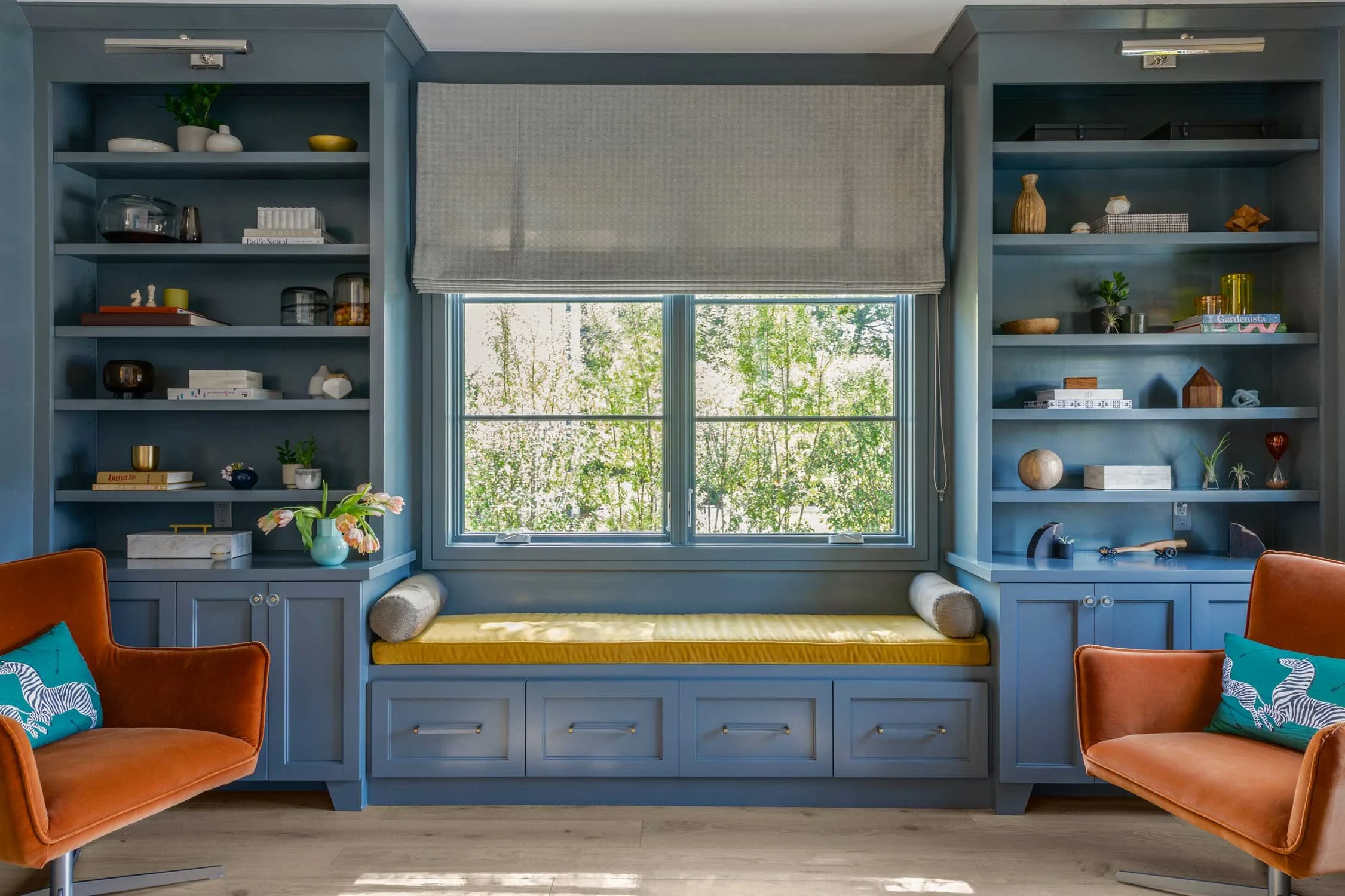
White oak or walnut? Marble or quartzite? Wallpaper or paint? The materials we choose have to do more than look beautiful on installation day. Here’s how we think about what will actually work in your home.
Choosing materials is one of my favorite parts of designing a home. It's also where clients can get completely overwhelmed.
There are thousands of beautiful options, and Instagram and Pinterest aren't exactly helping. You can fall in love with a dramatic marble kitchen in one photo, a walnut-paneled room in the next, and handmade terracotta tile five minutes later.
The question isn't really, "Which material is best?" It's: "Which material is best here, for this family, in this house?"
At Nash Design Group, we design homes for people who actually live in them. There are kids. Dogs. Dinner parties. Red wine. Wet bathing suits. Friends around the kitchen island. Someone is inevitably going to put a glass down without a coaster.
So when we're choosing materials, we're balancing beauty with durability, maintenance, architecture, budget, and how something will age.
I'm also a big believer in natural materials and a little imperfection. Wood changes. Marble can etch. Handmade tile varies. Linen wrinkles. To me, that's often what makes a home more interesting over time.
Here is how we think through some of the biggest material decisions in a new construction or whole-home renovation.
Quick Answer …
The best materials for an interior design project depend on where they're being used, how much wear they'll receive, how much maintenance you're comfortable with, and how you want them to age. For permanent elements such as flooring, cabinetry, countertops, and tile, prioritize durability, craftsmanship, and materials that complement the architecture rather than short-term trends. Natural materials such as wood and stone can develop patina over time, while engineered and performance materials may offer greater consistency and lower maintenance. There is no single "best" material—the right choice balances beauty, performance, lifestyle, and longevity.
Wood: White Oak vs. Walnut
We use a lot of wood because it's one of the easiest ways to bring warmth into a home.
Two of the woods homeowners ask about most are white oak and walnut. Both are beautiful. Both can feel incredibly luxurious. But they create very different moods.
White oak is probably my go-to.
It has a relatively straight, visible grain and can range from pale natural tones to warmer brown depending on the cut and finish. It works beautifully in contemporary, transitional, organic modern, California coastal, and updated traditional homes.
It also wears well in busy family spaces, which is a big part of why I like it.
For flooring, cabinetry, built-ins, and millwork, white oak gives us warmth without making a room feel heavy. It also plays nicely with stone, plaster, handmade tile, and layered textiles.
In our Waves + Roots beach house in Half Moon Bay, warm wood tones help ground the home's coastal palette and keep the interiors from feeling too crisp or themed. The natural materiality supports the relaxed, family-friendly quality we wanted throughout the house.
Walnut
Walnut immediately creates a different feeling.
It's darker, richer, and moodier, with beautiful natural variation that can range from chocolate brown to lighter caramel tones. Where white oak tends to feel relaxed and airy, walnut can add sophistication and depth.
I tend to use walnut more selectively—when I want contrast or a strong architectural moment rather than as the default wood throughout an entire house.
It can be especially beautiful in a bar, office, vanity, library, or statement piece of cabinetry.
White Oak vs. Walnut Cabinets
For cabinetry, I usually lean toward white oak because of its versatility, durability, and lighter visual weight.
Walnut can be gorgeous when the design needs richness or contrast, but white oak often gives us more flexibility across an entire home.
The bigger question is how the wood relates to the flooring, stone, architecture, and furniture around it.
White Oak vs. Walnut Flooring
For flooring, I tend to favor white oak for the same reason: it can take a lot of wear while still feeling warm, natural, and timeless.
Walnut flooring is beautiful, but I would use it more selectively because it has a softer, more refined character.
Neither answer is universally right.
But if you're asking me what I personally gravitate toward for a busy family home, it's white oak.
Best Countertop Materials: Start With How You Live
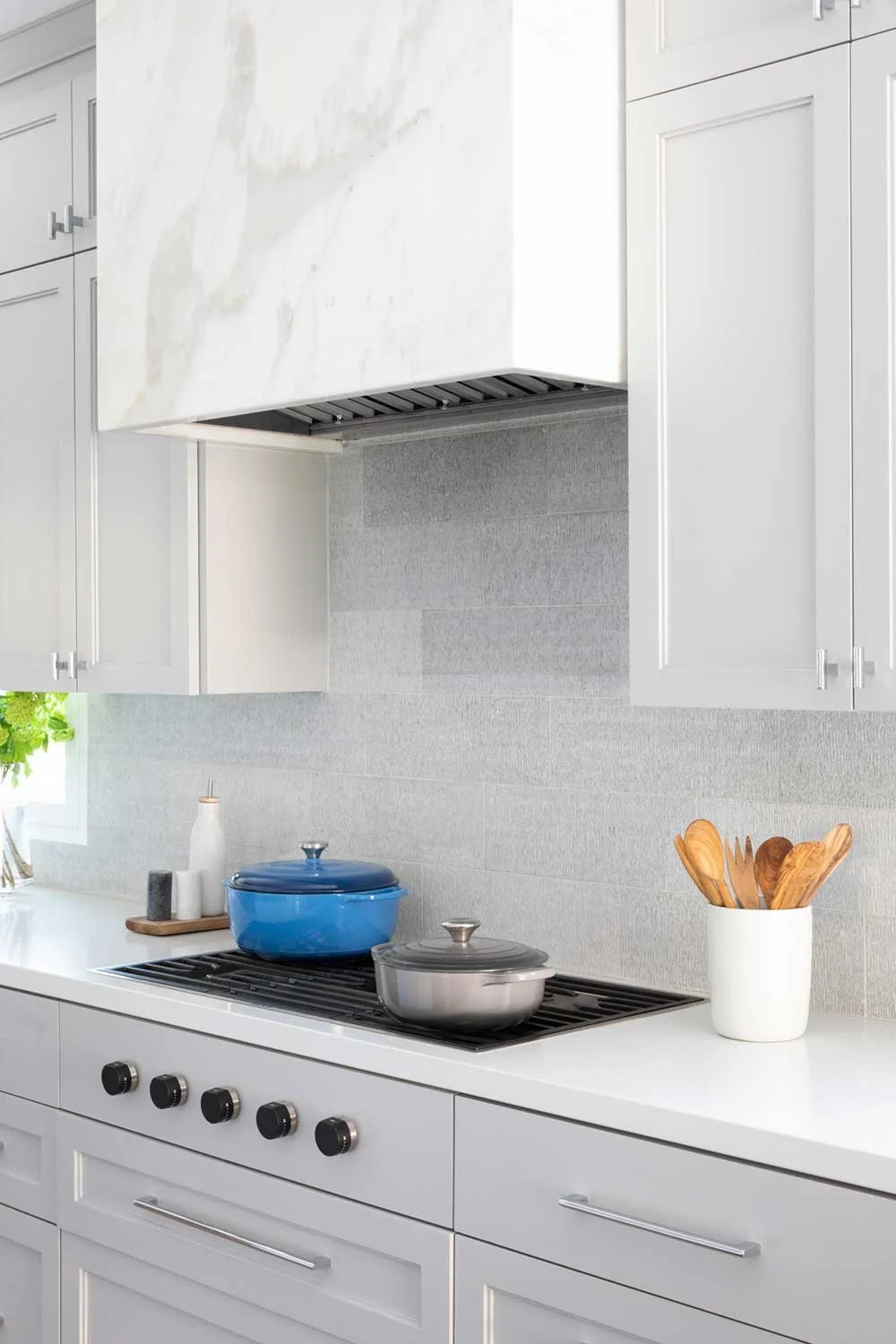
Countertops might generate more questions than almost any other material we specify.
Everyone wants something beautiful.
Everyone also wants something indestructible.
Unfortunately, those two things don't always come in the same slab.
The major options we consider include quartzite, marble, granite, soapstone, and engineered quartz, along with other specialty surfaces depending on the project.
Quartzite
Quartzite can be a fantastic choice when clients want the movement and depth of natural stone with strong durability.
It's especially appealing in kitchens because you can get incredible veining without automatically accepting the same level of etching risk that comes with marble.
Marble
I love marble.
Let's just get that out of the way.
It's timeless, natural, and almost impossible to replicate perfectly with a manufactured surface.
It also requires a client who understands what living with marble means.
If you want your counters to look untouched forever, marble may not be for you.
If you're okay with patina and a little evidence of life, it can be one of the most beautiful materials in a home.
In Manzanita Grove in Menlo Park, we used Calacatta Fantastico in the kitchen and Calacatta Borghini in the bar and powder bath. Those stones bring movement, warmth, and a sense of history into the home while connecting beautifully with the Spanish Revival architecture and handcrafted finishes.
Granite
Granite remains one of the workhorses of natural stone.
It's durable, available in an enormous range of colors and patterns, and can work beautifully when the right slab and finish are selected.
Soapstone
Soapstone has a wonderful tactile quality and can create a very soulful kitchen.
It develops a distinctive patina, which means it works best for homeowners who genuinely appreciate materials changing over time.
Engineered Quartz
Engineered quartz offers consistency and relatively straightforward maintenance, which can make it very practical.
Where I think the conversation gets interesting is deciding whether that uniformity is what the project needs.
Sometimes it absolutely is.
Other times, natural stone is what gives the room its personality.
Marble vs. Quartzite: Which Is Better for a Kitchen?
This is one of the questions I hear constantly.
And the answer is:
It depends on how you live.
If your priority is natural stone with strong durability, quartzite is usually the safer bet.
If you love the depth, movement, and history of marble and you're comfortable with patina, then marble can be absolutely worth it.
For a busy family kitchen, I will often steer clients toward quartzite if they want less maintenance.
But I would never say marble is the wrong choice.
It's only the wrong choice if you expect it to behave like something it's not.
In Waves + Roots, we used natural, tactile materials throughout the home to support a relaxed coastal feel. In projects like that, the material selection is always about balancing beauty with the reality of family use and frequent entertaining.
Honed vs. Polished vs. Leathered Stone
Choosing the slab is only half the decision.
The finish completely changes how the stone looks, feels, and behaves.
Polished Stone
Polished stone has a smooth, reflective finish that emphasizes color and veining.
It's dramatic and can be beautiful in the right setting.
But personally, I use it less often.
The shine can make fingerprints, water spots, etching, and scratches more visible, and it often feels a little more formal than the interiors we create.
Honed Stone
Honed is my preference most of the time.
It has a softer, more matte appearance and gives natural stone a relaxed, tactile quality that works beautifully with the way we design.
It also tends to feel more forgiving in real life.
That's especially important in family kitchens, bathrooms, bars, and other high-use spaces where I don't want clients worrying about every water spot.
In Manzanita Grove, natural stone is paired with hand-glazed tile, concrete flooring, and plaster finishes. A softer stone finish fits that layered material story much better than a highly reflective polish would.
Leathered Stone
Leathering adds texture and depth.
I love it on darker stones when we want a richer, more organic effect.
In the primary bath at Manzanita Grove, an Absolute Black flamed stone counter creates a strong textural contrast against hand-painted Arto tile and Cle tile. That kind of surface treatment adds depth without relying on shine.
So Which Finish Is Best?
For me, honed is usually the starting point.
It feels sophisticated without feeling precious, and it works incredibly well in the warm, layered California homes we design.
Polished stone absolutely has its place, but I tend to reserve it for moments where the reflectivity really contributes something to the design.
Fabric: Choose for the Person Sitting on It
Fabric selection is where I become very practical. That incredible pale linen you found? Beautiful.
Now tell me who's sitting on it.
High-Traffic Family Spaces
For family rooms, breakfast areas, play spaces, and other heavily used rooms, durability matters.
Performance fabrics have gotten so much better. You no longer have to choose between something that looks sophisticated and something that can survive a child with a chocolate-covered hand.
We consider:
How frequently the furniture will be used
Children and pets
Food and drink
Direct sunlight
Cleanability
Texture
How the fabric will stretch or relax
How much maintenance the homeowner realistically wants
In Manzanita Grove, textiles from Fabricut, Schumacher, Pindler, and Pollack add softness and refinement throughout the house without competing with the architecture and stone.
Lower-Traffic Rooms
A formal living room, primary bedroom, or occasional chair gives us more freedom.
That's where I may be more willing to introduce a beautiful natural linen, wool, velvet, or another fabric chosen as much for its hand and texture as its durability.
Performance vs. Natural Fibers
I don't think this has to be an either-or conversation. A house can have both. Use performance where performance matters. Use beautiful natural fibers where they'll be appreciated.
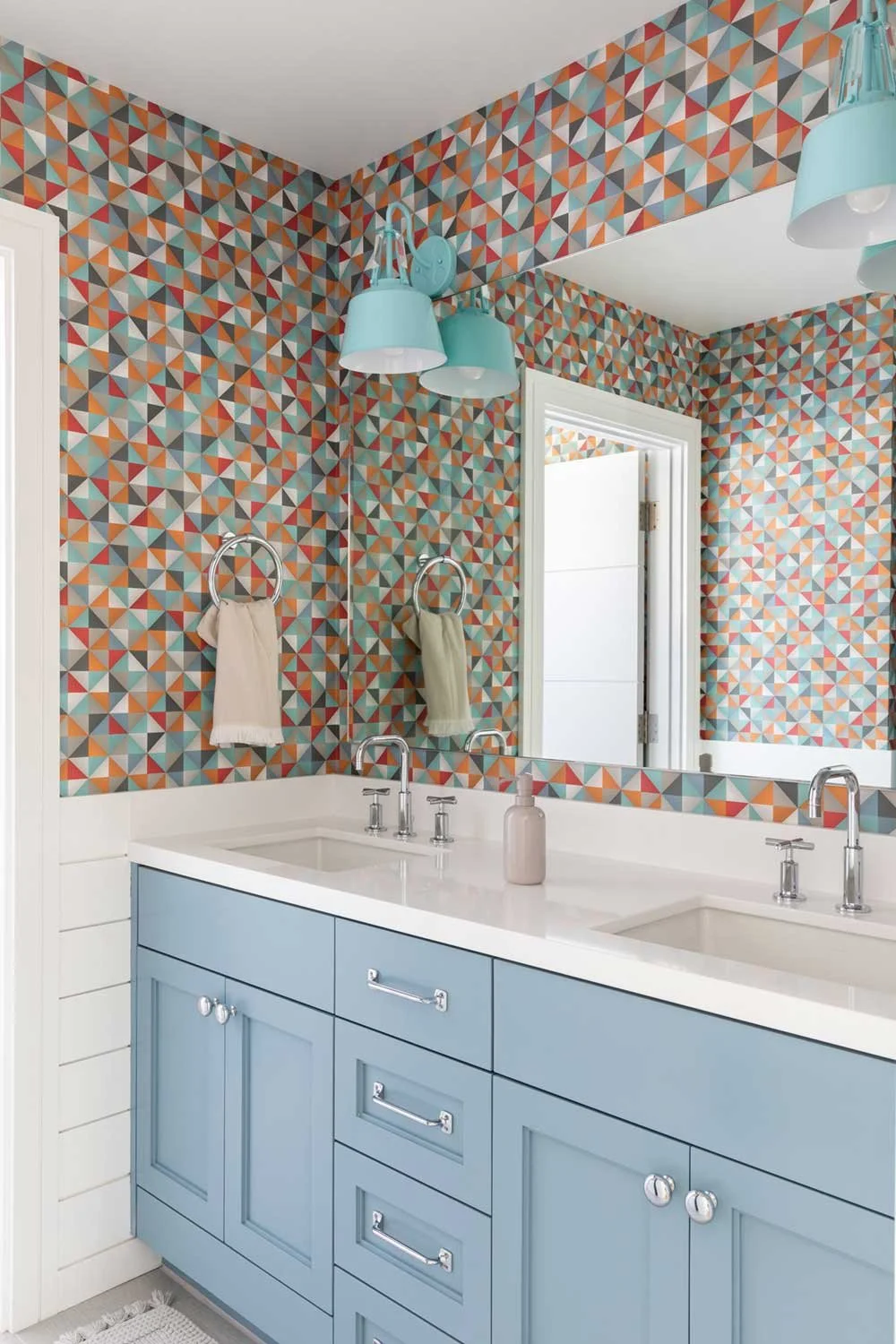
Wallpaper vs. Paint: When Should You Use Wallpaper?
I love wallpaper because it can completely change the experience of a room.
Paint gives you color. Wallpaper can give you color, pattern, texture, movement, scale, and sometimes even a sense of architecture.
Powder Rooms
Powder rooms are almost asking you to have fun.
They're small, contained spaces where a bolder pattern or texture doesn't have to compete with the rest of the house.
Bedrooms
Wallpaper can create incredible softness in a bedroom, particularly when we use a subtle pattern or natural texture.
Hallways
Hallways are often treated as leftover space. They shouldn't be.
Wallpaper can turn a passage into an experience and help connect rooms throughout a home.
Ceilings
Yes, ceilings. People forget there's an entire fifth surface sitting above them. Wallpaper on a ceiling can be unexpected and incredibly beautiful.
When Paint Is Better
Not every room needs wallpaper.
Sometimes beautiful architecture, artwork, millwork, or natural materials are already doing enough.
If a room has spectacular stone, strong cabinetry, and an incredible view, I may want the walls to quiet down.
That's one of the biggest lessons in material selection:
Everything can't be the star.
Tile: Choose It for the Application, Not Just the Photo
Tile is another category where the options are almost endless.
Handmade ceramic.
Zellige.
Porcelain.
Natural stone.
Mosaic.
Cement.
Large format.
Tiny format.
And I love a lot of them.
But where you're putting the tile should narrow the choices considerably.
Kitchen Backsplash Tile
A kitchen backsplash is a wonderful place to introduce character because it gives you texture without necessarily dominating the entire room.
I love handmade materials here.
In Manzanita Grove, the kitchen pairs Calacatta Fantastico with a zellige backsplash. That combination works because the stone brings movement while the handmade tile adds texture and imperfection without competing with it.
Bathroom Tile
Bathrooms require a more technical conversation.
We're considering water exposure, slip resistance, grout, cleaning, scale, transitions, drainage, and how the tile interacts with plumbing fixtures and cabinetry.
In Manzanita Grove, we used custom-color Fireclay tile, Arto hand-painted ceramic tile, zellige, Cle tile, and other layered materials across the bathrooms. The goal wasn't to make every bath match. It was to give each space its own personality while still feeling like part of the same home.
Primary Bathrooms
In a primary bath, I often like materials to feel calm and tactile rather than overly busy.
Natural stone, handmade tile, warm woods, and thoughtful lighting can do more than five competing tile patterns ever will.
Outdoor Tile
Exterior applications require another level of performance consideration.
Slip resistance, water absorption, heat, weather exposure, and maintenance all matter.
A material that works beautifully on a kitchen backsplash may be completely wrong for an exterior terrace.
How We Put All the Materials Together
Here's the part that's harder to explain in a sample box.
Individual materials can all be beautiful and still look terrible together.
A gorgeous white oak cabinet.
An incredible marble.
A handmade tile.
A dramatic wallpaper.
A beautiful brass fixture.
Put all five together without a hierarchy and suddenly the room feels chaotic.
We're always asking:
What's the star?
If the stone is spectacular, maybe everything around it gets quieter.
If the cabinetry has beautiful grain, we don't necessarily need the backsplash fighting for attention.
If we're using an incredible wallpaper, perhaps the furniture becomes simpler.
Material selection is as much about editing as choosing.
And we never design one room in isolation.
In Manzanita Grove, the Calacatta stone, handcrafted tile, arched details, concrete floors, and layered textiles all support the same larger idea: a refined, globally influenced interpretation of California Spanish Revival.
In Waves + Roots, the palette shifts completely. Warm woods, natural textures, and materials inspired by the surrounding beach environment create a softer, more relaxed coastal story.
Different homes.
Different materials.
Same philosophy.
The materials should make sense for the architecture, the setting, and the people who live there.
My Biggest Rule: Know How You Want Your Home to Age
This is probably the most important material conversation we have with clients.
Do you want everything to look pristine?
Or do you love patina?
Do scratches make you crazy?
Do you think worn wood gets better?
Are you okay with marble telling the story of a few dinner parties?
There isn't a correct answer.
But there is an answer that's correct for you.
Personally, I gravitate toward white oak over walnut and honed stone over polished because both tend to create the warm, natural, relaxed feeling I love—and they live beautifully in the kind of family homes we design.
But those are starting points, not formulas.
Every material choice still has to earn its place in the specific home.
That's the difference between selecting materials for a photograph and selecting materials for a life.
At Nash Design Group, we're always designing for the second one.
Frequently Asked Questions
Is white oak or walnut better for kitchen cabinets?
Both can be beautiful, but I generally prefer white oak for kitchen cabinetry. It feels lighter and more versatile, works across a wide range of architectural styles, and holds up well in busy family spaces. Walnut is wonderful when a room calls for more depth or contrast, but I tend to use it more selectively.
Is quartzite more durable than marble?
Generally, yes. Quartzite is typically harder and more resistant to everyday wear than marble, while marble is more susceptible to etching from acidic foods and drinks. That said, marble can still be a wonderful kitchen material for clients who appreciate patina and understand how it will age.
What is the difference between honed, polished, and leathered stone?
Polished stone is smooth and reflective, honed stone is smooth with a softer matte finish, and leathered stone has a tactile textured surface. I tend to prefer honed finishes because they feel more natural, relaxed, and forgiving in everyday use.
Which countertop material needs the least maintenance?
Engineered quartz is often one of the lower-maintenance options. Among natural stones, many granites and true quartzites can also perform very well. The right choice depends on how much heat, staining, etching, and general wear the surface will receive.
Is walnut more expensive than white oak?
Pricing varies by grade, cut, sourcing, fabrication, and market conditions, so there isn't a universal answer. For cabinetry or flooring, compare actual project pricing rather than assuming one species will always cost more.
Does leathered stone hide fingerprints and water spots better than polished stone?
Often, yes. Because leathered stone has more texture and less reflectivity, fingerprints, smudges, and water spots may be less noticeable than they are on highly polished surfaces.
Where should wallpaper be used instead of paint?
Wallpaper is especially effective in powder rooms, bedrooms, hallways, dining rooms, and ceilings when you want to add pattern, texture, or depth. Paint may be the better choice when the room already has strong architectural features, artwork, stone, cabinetry, or other materials that deserve to take the lead.