
Designing a Home That Protects Its Value: How Thoughtful Design Decisions Affect Long-Term ResalE
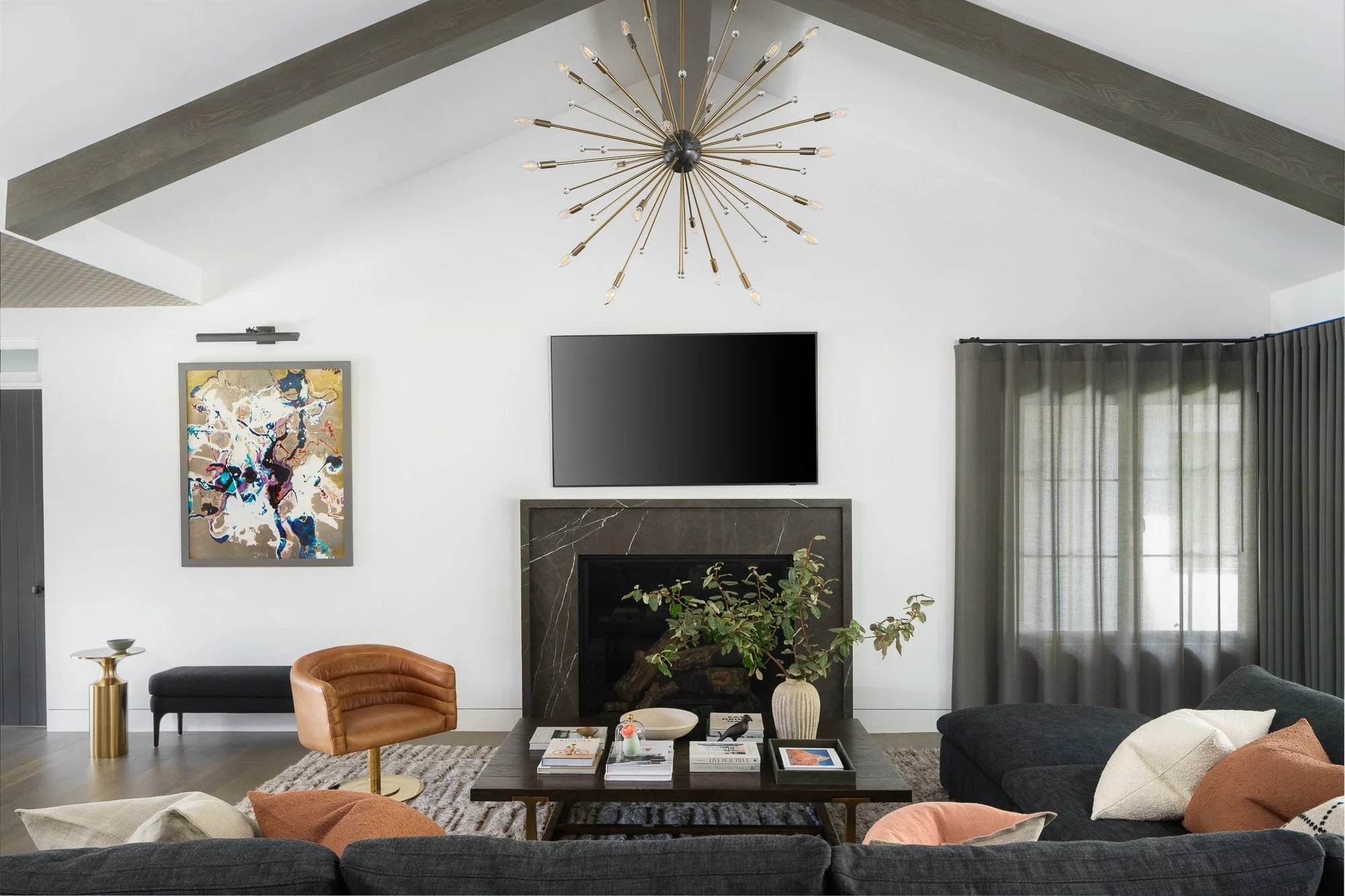
Every client who walks into our studio is investing in a home they plan to enjoy. Most of them are also, whether they say it outright or not, protecting an asset. I've never found those two things to be in conflict, though I think a lot of the design industry treats them as if they are, as though "resale value" is a cold, transactional concern that has no place in a conversation about beauty. I disagree. The clients we work best with understand that a well-designed home is both a place to live and a financial decision, and the best design work honors both at once.
This is a conversation I have often, usually framed a little differently each time. Sometimes it's a straightforward question: "Will this choice hold up?" Sometimes it's more subtle, a slight hesitation before approving a bold material or an unusual layout, the kind of pause that signals someone doing quiet math about resale even while they're picking out a backsplash. I take that instinct seriously, because it's usually right. Some design decisions age beautifully. Others date a home within a few years. Knowing the difference, and being honest about it before a client commits, is part of what a design fee is actually paying for.
Why "Timeless" Isn't the Same as "Safe"
I want to clear up a misconception early, because I think it causes people to make worse decisions than they would otherwise. Protecting a home's long-term value does not mean playing it safe, and it doesn't mean stripping a home of personality in favor of the most neutral choice available. A home that's designed purely to avoid offending a hypothetical future buyer often ends up feeling generic to the people actually living in it right now, and generic isn't the same thing as valuable.
What actually protects value is different from what feels safe. It's a combination of:
Quality of construction and materials, which determines whether a home performs well for decades or requires costly intervention within a few years
Architectural decisions that respect how the home is naturally used, rather than optimizing for a passing trend
Craftsmanship that holds up to close inspection, not just first impressions
Restraint in the choices that are hardest to change later, paired with personality in the choices that are easiest to update
That distinction, between what's hard to change and what's easy to change, is one of the most useful frameworks I use with clients, and it's worth explaining in more detail.
The Choices That Are Hard to Undo
Some decisions in a home are structural or deeply embedded, and reversing them later is expensive, disruptive, or sometimes simply not done. These are the decisions where I push clients hardest toward quality and restraint, because a mistake here doesn't get corrected with a weekend refresh. It gets corrected with another full renovation, years down the line, at a cost that dwarfs what it would have taken to do it right the first time.
This category includes things like:
Layout and flow. A floor plan that doesn't match how people actually live, whether that's a closed-off kitchen in a home built for entertaining or a primary suite with no real separation from common living space, is one of the hardest things to fix after the fact. It's also one of the first things that limits a home's appeal to future buyers, regardless of how beautifully it's finished.
Structural material choices. Flooring substrates, cabinetry construction, and the underlying build quality of built-ins are decisions that get sealed behind finishes. A cabinet box built to a lower standard will eventually show it, through sagging shelves or doors that no longer close properly, no matter how good the exterior finish looks on installation day.
Natural materials with genuine longevity. Stone, solid wood, and quality metal finishes tend to age with character rather than simply wearing out. Their upfront cost is real, but so is their multi-decade performance, which is a different value proposition than a lower-cost material that needs replacing within a single ownership period.
Window and door quality. These affect a home's comfort, energy performance, and daily function for as long as the home stands. Poor quality here is rarely visible at first walkthrough and becomes very visible, and very expensive, over time.
I tell clients that this is where the design fee earns its keep most directly. Getting these decisions right the first time isn't about spending more everywhere. It's about knowing precisely where quality actually compounds in value, and where it doesn't.
The Choices That Are Easy to Refresh
On the other end of that spectrum are decisions that are genuinely low-risk to make boldly, because they're inexpensive and straightforward to update if tastes change. This is where personality belongs, and where I actively encourage clients to stop worrying about resale and simply choose what they love.
This includes things like:
Paint colors, which can be changed in a weekend
Light fixtures and hardware, which are simple swaps relative to the cost of the overall project
Furniture and soft furnishings, which are already the most personal and most easily evolved layer of a home
Wallpaper in lower-commitment spaces like a powder room or an entry, where a bold choice adds character without affecting the home's bones
The mistake I see clients make most often is applying resale caution to exactly the wrong category of decisions. They agonize over a wallpaper choice that could be changed in an afternoon, while treating a structural layout decision, something that will define how the home functions for the next twenty years, as a minor detail to be finalized quickly. Getting that hierarchy backwards is how homes end up both undervalued and, somewhat ironically, less enjoyable to actually live in.
Why Cutting Corners Early Always Costs More Later
This is the part of the conversation I try to be most direct about, because it's the one place where I see clients occasionally talk themselves into a mistake, usually with good intentions. The instinct to save money on something invisible, the underlayment nobody will ever see, the mid-grade version of a fixture that looks identical to the premium one on a showroom floor, feels responsible in the moment. It rarely is.
Quality construction protects value in ways that aren't always obvious until years later:
A well-built home requires less deferred maintenance, which matters enormously to a future buyer's inspection and, just as importantly, to your own experience of living in it in the meantime.
Materials chosen for genuine durability, not just initial appearance, hold their finish and function over time rather than needing replacement mid-ownership.
Structural and mechanical systems installed to a higher standard tend to have fewer failures, and fewer failures mean fewer disruptions to daily life and fewer unplanned expenses.
I think of design fees, and quality construction investment more broadly, the way I'd want a client to think about them: not as an expense to be minimized, but as money that comes back over the life of the home, both in the form of a home that performs well for the family living in it and in the form of a home that holds its value when it's eventually time to sell. Cutting a corner rarely saves the money it appears to save. It usually just defers the cost, with interest, to a future date.
Designing for How the Home Is Actually Used
There's a version of "protecting resale value" that I want to push back on, because I think it leads people astray. It's the idea that a home should be designed for a hypothetical future buyer rather than for the family actually living in it. In my experience, these two goals are far more aligned than people assume.
A home designed around genuine function, real entertaining needs, actual traffic flow, honest storage requirements, tends to hold its value precisely because it works. A kitchen island sized for how a family actually cooks and gathers reads as thoughtful to any future buyer, not just the current owner. A mudroom that competently manages the chaos of a busy household solves a problem every subsequent owner will also have. Function, done well, doesn't go out of style the way a passing aesthetic trend does.
This is part of why I don't believe in designing defensively, choosing the most neutral, least personal option out of fear that anything more distinctive will limit future appeal. A home with genuine character, built on a foundation of quality construction and thoughtful function, tends to appeal to buyers precisely because it feels intentional rather than generic. What actually limits appeal isn't personality. It's poor function dressed up in beautiful finishes.
What This Looks Like in Practice
When we're working through material and design decisions with a client, the value-protection conversation isn't a separate phase, it's woven into nearly every choice we make together. A few of the questions I find myself asking, out loud or internally, throughout a project:
Is this material chosen because it performs well over decades, or because it's currently on trend?
If tastes evolve in ten years, is this an easy update or a full renovation?
Does this layout decision solve a real, ongoing need, or is it solving for a single moment, like a photograph or a specific season of life?
Would I be comfortable defending this choice to a future owner who has never met this family and doesn't know their story?
That last question is one I take seriously, even though most of my clients aren't planning to sell anytime soon. It's not about designing for a stranger. It's a useful discipline that tends to separate decisions built on genuine quality from decisions built on a passing impulse.
The Investment Mindset, Applied Honestly
I've worked with clients who came to design with an investor's mindset from the very beginning, and clients who arrived purely focused on how a home would feel to live in, with resale value barely on their radar. What I've found is that the best outcomes happen when both of these instincts are present, even if one is quieter than the other. A home that's designed purely for resale often ends up feeling hollow, like it was built for no one in particular. A home designed with zero regard for its long-term performance can end up costing its owners far more than they anticipated, in maintenance, in depreciation, or in the eventual need to redo work that wasn't done well the first time.
The clients I trust most in this work are the ones who understand that a thoughtfully invested design fee, paired with quality materials and construction, tends to return far more than it costs, not just in resale numbers, but in years of a home that actually performs the way it was meant to. That's not a sales pitch. It's simply been true, project after project, for as long as I've been doing this work.
Frequently Asked Questions
Do certain design trends actually hurt a home's resale value over time?
Trends that are tied to a specific, narrow moment in style tend to date a home faster than more enduring choices, particularly when applied to elements that are expensive or disruptive to change, like flooring, cabinetry, or major finishes. Trend-driven choices in easily updated areas, like paint or furniture, carry much lower risk.
Is it worth spending more on materials that no one will see, like underlayment or structural components?
Generally, yes. Quality in these invisible layers affects how well a home performs over decades, including how much maintenance it requires and how well finishes hold up above them. Cutting costs here often leads to more expensive repairs and replacements later.
Should I avoid bold design choices if I'm concerned about resale value?
Not necessarily. The choices worth being cautious with are the ones that are hard or expensive to change later, like layout and structural materials. Bold choices in easily updated areas, like paint, wallpaper, or furniture, add character without meaningfully affecting long-term value.
How does a home's layout affect its resale value compared to its finishes?
Layout tends to have a larger and longer-lasting impact than finishes, since it's expensive and disruptive to change after construction. A layout that doesn't match how people naturally live, regardless of how well it's finished, tends to limit a home's appeal more than any individual material or color choice.
Does a higher design fee actually translate into a home that holds its value better?
A thoughtfully managed design process tends to prevent the kind of costly mistakes, like poor layout decisions or low-quality construction choices, that erode a home's value and performance over time. The value isn't in the fee itself, but in the decisions and oversight it enables throughout the project.
What's the difference between a house that "shows well" and one that actually holds its value?
A house that shows well is optimized for a first impression, often through cosmetic finishes and staging. A house that holds its value is built on genuine construction quality, sound layout, and materials that perform well over years, which matters far more once a buyer looks past the surface.
Can a home be designed with a lot of personality and still protect its resale value?
Yes, and in my experience, this is usually the better outcome. Character and genuine function tend to read as intentional to future buyers, while a home designed defensively to avoid any personal expression often ends up feeling generic rather than genuinely valuable.