
The Lake Tahoe Second Home: Designing for How a Family Actually Uses a Vacation Property
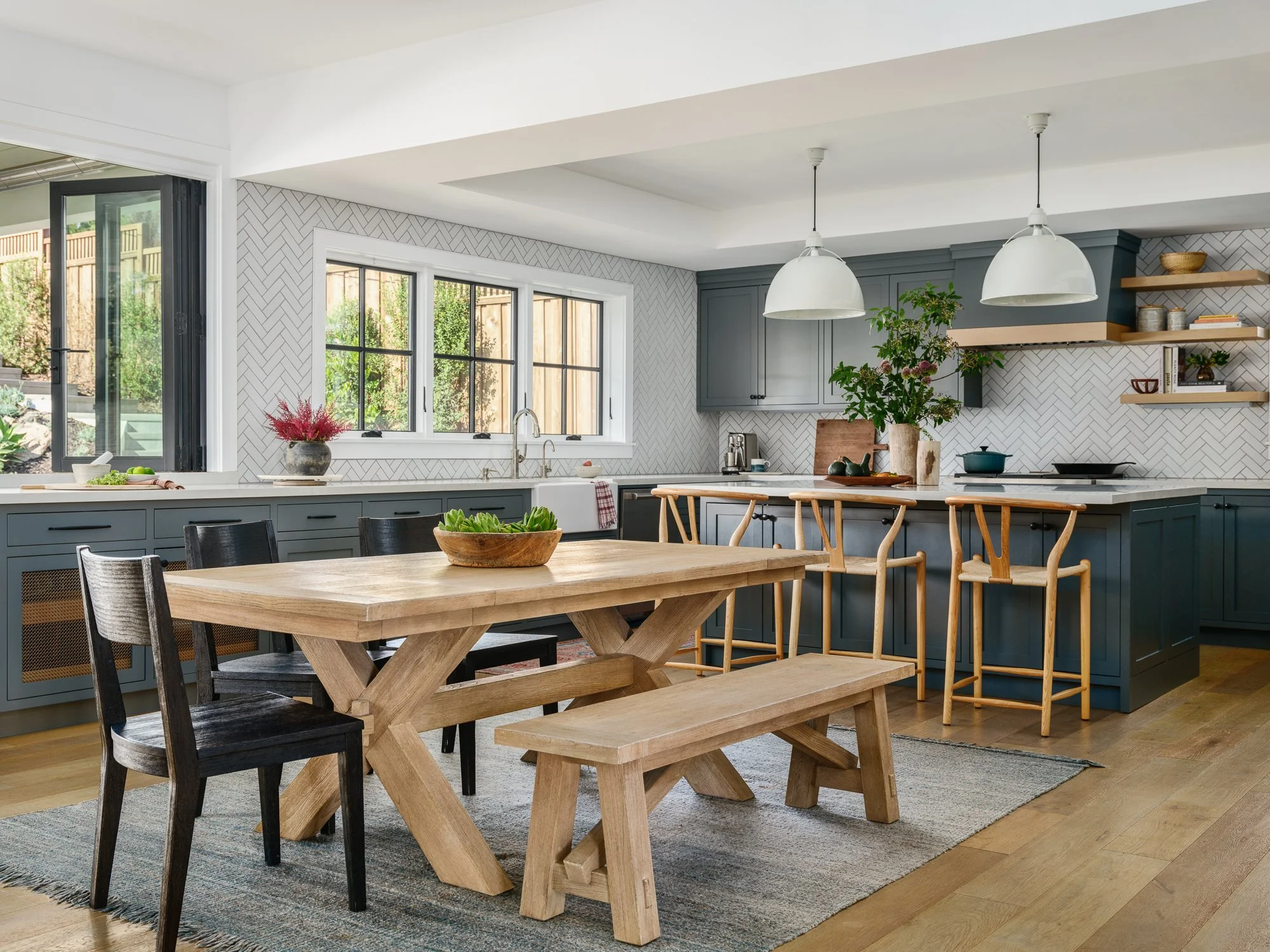
A primary home and a second home are not the same design problem wearing different scenery. I know that sounds obvious once it's said out loud, but I can't tell you how many Tahoe projects arrive at our studio designed, unintentionally, like a smaller version of a family's Peninsula home. Same instincts around layout, same assumptions about daily use, same finish choices that were right for a house lived in five days a week and wrong for one lived in five weekends a season.
A vacation property asks different questions than a primary residence does. Not fewer questions, and not less thoughtful ones. Different ones. How does a home perform when no one has walked through the front door in six weeks? How do you host twelve people comfortably when the home only needs to seat four most of the year? How does a house that sits empty through a Tuesday in March still feel like it belongs entirely to the family who owns it, rather than a well-appointed hotel suite? These are the questions I want to walk through, because I think getting them right is what separates a second home that gets used and loved for decades from one that quietly becomes a source of stress.
The Occupancy Problem Nobody Talks About Enough
Here's the thing about a vacation home that doesn't come up nearly often enough in early design conversations: it spends most of its life empty. A primary residence has someone in it constantly, monitoring small issues before they become large ones, running water through pipes, keeping humidity in check, simply being present. A second home in Tahoe might sit unoccupied for weeks at a stretch, through weather swings that would stress-test even a well-built primary residence.
This changes how we think about nearly every system and material choice, not just the ones that are visible.
Plumbing and water systems need to be designed with freeze protection and monitoring in mind, since a burst pipe discovered on arrival, rather than the day it happens, is a dramatically worse outcome.
Materials need to tolerate temperature and humidity swings without a person there to notice early warning signs, like a door that's started to stick or a finish that's begun to show stress.
Smart home and remote monitoring systems earn their keep here in a way they don't always in a primary residence, since they're often the only early warning a family gets that something needs attention.
Durability has to be evaluated differently. A material that would show wear gradually, and get addressed gradually, in a full-time home can fail more abruptly in a home that's only checked on periodically.
None of this means a vacation home needs to look rugged or over-engineered. It means the design and specification process has to account for absence as a real condition, not an afterthought.
Designing for the Crowd, Not the Everyday
This is where a second home genuinely diverges from a primary residence in its core planning logic, and it's one of my favorite parts of this work. Most primary homes are designed around the daily rhythm of the immediate family: how many people eat breakfast together on a Tuesday, how much everyday storage a family actually needs. A well-designed Tahoe second home is usually designed around a different rhythm entirely: how the space performs when it's full.
Families who invest in a mountain property tend to use it as a gathering point, not a retreat for two. Extended family for a week over the holidays. College friends for a long weekend of skiing. A house that comfortably sleeps four but needs to functionally host twelve, for meals, for gear, for the general chaos of a group vacation.
A few of the planning decisions this actually changes:
Kitchen scale and workflow. Not necessarily a larger kitchen, but one designed for multiple people cooking and cleaning up simultaneously, with enough counter space and storage to support a big group meal without becoming the bottleneck of the trip.
Flexible sleeping arrangements. Bunk rooms, convertible spaces, and thoughtfully designed shared bathrooms tend to matter more here than in a primary home, since the goal is comfortably absorbing variable group sizes rather than serving one fixed household.
Gathering spaces sized for a crowd, not a couple. Great rooms and dining areas that can genuinely seat and comfortably hold a large group, rather than a beautifully proportioned space that only works for four.
Storage built for gear, not just belongings. Ski equipment, boots, outerwear for a dozen people rotating through a season, this requires real, considered storage, not a coat closet borrowed from a Peninsula floor plan.
The Mudroom Is the Most Important Room in a Ski House
I mentioned this briefly in the piece on designing for Tahoe's climate, but it deserves its own real attention here, because in a vacation property specifically, the mudroom often does more functional work than any other single room in the house.
Think about what actually happens in the first twenty minutes after a family arrives from a day on the mountain, or the first twenty minutes of getting a group of twelve out the door for a ski day. Wet boots. Layers being shed. Equipment that needs somewhere to dry and somewhere to live overnight. A poorly designed entry sequence turns this into a daily source of friction. A well-designed one absorbs it entirely.
For a true second home built around ski season use, I think about mudroom design around a few core functions:
Boot and gear drying, with proper ventilation and surfaces that can handle repeated moisture without deteriorating
Individual storage for a rotating cast of guests, not just the immediate family, since a vacation home mudroom often needs to serve more people at once than a primary home's ever would
Durable, easy-to-clean flooring and surfaces that can handle snow, salt, and mud without showing wear after a single season
A clear separation from the home's main living spaces, so the chaos of arrival and departure doesn't bleed into the rest of the house
Get this room right, and it quietly makes the entire house function better. Get it wrong, and every arrival and departure carries a small tax of frustration that compounds over years of ownership.
Making a Part-Time Home Feel Fully Personal
This is the piece I care about most, honestly, because I think it's the one most often missed. There's a real temptation, when designing a home that will be occupied only part of the year, to default toward something safer and more neutral, almost hospitality-adjacent, on the theory that it needs to please a rotating cast of guests rather than reflect one family's specific taste.
I'd push back on that instinct every time. A vacation home that feels like a well-run hotel suite is pleasant enough to visit, but it's not a home your family will feel genuinely attached to over the years, and attachment is a large part of why families keep and pass down a mountain property in the first place.
The families who get this right tend to do a few things consistently:
Personal art, photography, and objects woven throughout creates a home that feels owned, not staged.
A design language connected to the landscape, not generic "mountain style" creates a sense of place specific to that property and that family.
Furniture chosen for real comfort and use, not just photographs, creates spaces the family actually gathers in, rather than admires from a doorway.
Consistency with the family's taste from their primary home, translated rather than abandoned, creates continuity, so the second home feels like an extension of the family rather than a separate identity.
A vacation home doesn't need to look identical to a family's primary residence, and often shouldn't. Materials and mood can genuinely shift to reflect the mountain setting. But the underlying sensibility, the things a family actually values in how a home feels, should carry through. That continuity is part of what makes a second home feel like it belongs to a specific family rather than to whoever happens to be staying in it that week.
Balancing Durability and Warmth
The honest tension in every second home project is this: durability and warmth can pull in different directions if you're not careful. The most bulletproof materials available aren't always the most inviting ones, and the most beautiful, tactile materials aren't always the ones built to withstand a decade of ski boots, wet dogs, and infrequent maintenance oversight.
Getting this balance right is less about compromise and more about precision, knowing exactly where a family needs true durability and where there's room for something more delicate.
High-traffic zones, entries, and anywhere gear moves through daily warrant real durability as the primary criteria, since these areas take the most punishment with the least ongoing attention.
Primary gathering spaces can lean more toward comfort and warmth, since they're used more intentionally and don't take the same abuse as an entry or mudroom.
Materials that develop character with age, like certain woods and natural stone, often serve a vacation home particularly well, since a bit of natural wear reads as authentic rather than as a maintenance failure.
This is where experience matters most, honestly. Knowing which materials age gracefully under infrequent, intense use, versus which ones simply show neglect, is the kind of judgment that comes from having specified these choices across enough mountain properties to see how they actually perform over years, not just how they look at installation.
What This Means for Your Project
If you're considering a second home in Tahoe, the most useful thing I can offer is this: resist the urge to design it as a smaller, simpler version of your primary residence. It's not simpler. It's a different set of demands entirely, built around infrequent occupancy, variable group sizes, and the specific physical realities of a mountain climate. Done thoughtfully, it becomes a home your family returns to for decades, one that feels distinctly yours every time you walk back through the door, rather than a property you're simply maintaining between visits.
Frequently Asked Questions
How is designing a second home different from designing a primary residence?
A second home has to account for extended periods of vacancy, variable and often large group sizes, and a different rhythm of use overall. This changes decisions around plumbing and monitoring systems, material durability, storage, and how spaces are sized, since the home is designed around peak use rather than daily routine.
What happens to a vacation home's systems when no one is there to notice problems early?
Without daily occupancy, small issues like a slow leak or a failing seal can go unnoticed far longer than they would in a full-time home. This is why freeze protection, remote monitoring systems, and materials chosen for resilience matter more in a second home than they typically do in a primary residence.
Why does the mudroom matter so much in a ski house specifically?
It absorbs the daily friction of gear, wet layers, and multiple people coming and going, often for a rotating group of guests rather than just the immediate family. A well-designed mudroom, with proper drying, storage, and durable surfaces, keeps that chaos from spreading into the rest of the home.
How do you design a home to comfortably host large groups without making it feel oversized the rest of the year?
Through flexible planning rather than simply building bigger. Convertible sleeping arrangements, kitchens designed for multiple cooks, and gathering spaces sized for a crowd allow a home to expand functionally for peak occupancy without feeling empty or impersonal during quieter stretches.
Should a Tahoe second home match the design style of a family's primary residence?
Not necessarily in materials or mood, which can and often should reflect the mountain setting. But the underlying sensibility, the things a family genuinely values in how a home feels, should carry through, so the second home feels like an extension of the family rather than a separate, disconnected property.
What design choices matter most for durability in a home that's used part-time?
High-traffic areas like entries and mudrooms benefit most from prioritizing durability, since they take consistent wear with little ongoing oversight. Primary gathering spaces have more flexibility to prioritize comfort and warmth, since they see more intentional, lower-impact use.
Is it more expensive to design a home for infrequent occupancy and large group use?
Certain elements, like monitoring systems, freeze protection, and higher-durability materials in key areas, do add cost upfront. That investment tends to prevent more significant expenses later, like water damage from an unnoticed issue or premature material failure from repeated heavy use without daily oversight.