
How Custom Furniture and Material Lead Times Affect a Project Timeline
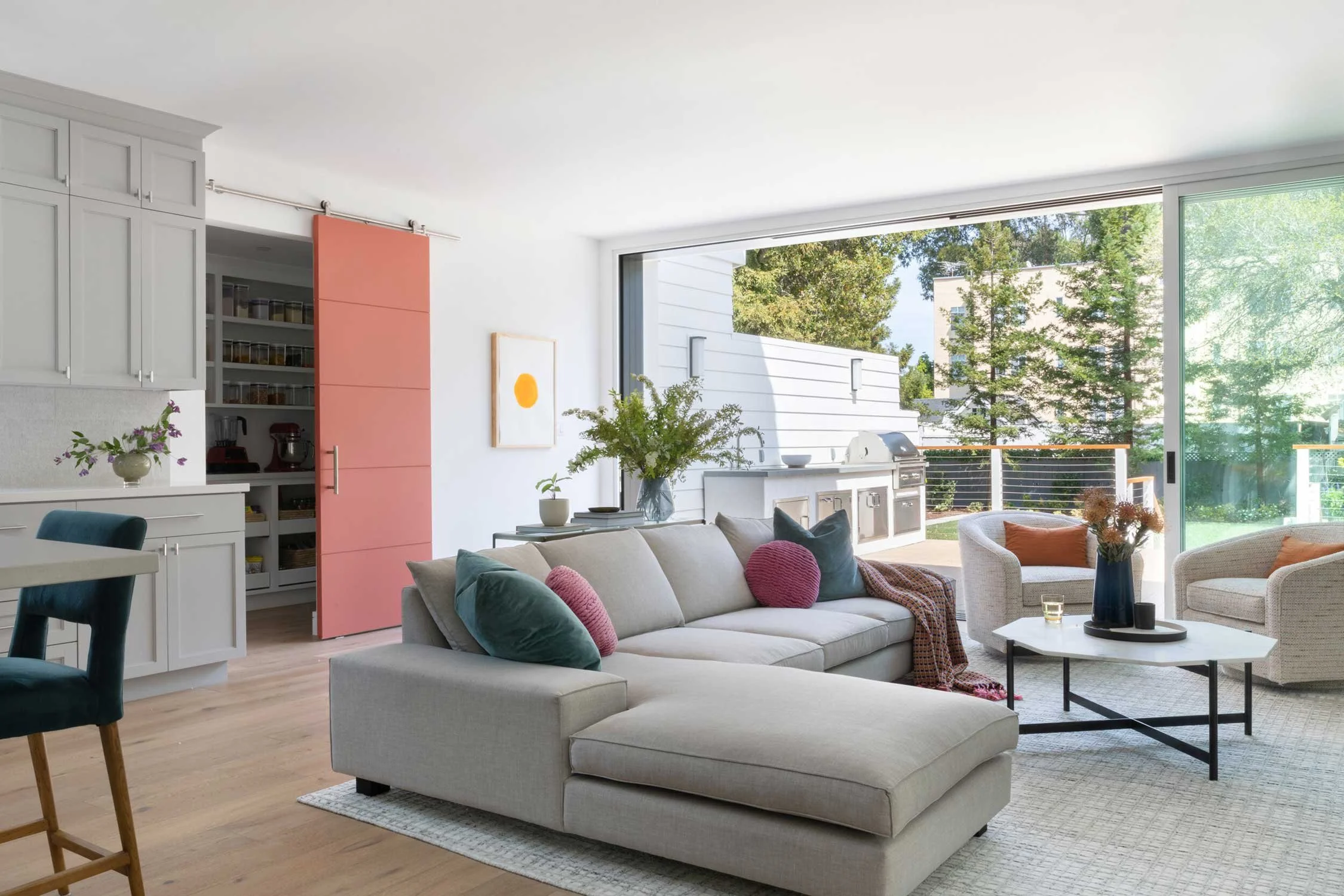
There's a moment in nearly every project when a client falls in love with something. A dining table with the right proportions and the right patina. A stone slab with veining that feels like it was cut specifically for their kitchen. A custom sofa in exactly the right depth for how they actually sit and watch television. And almost every time, my next sentence is some version of "wonderful, let's order it now, because it won't arrive for four to six months."
That sentence tends to land with a bit of surprise. Most people don't walk into a design project thinking about lead times the same way they think about square footage or paint colors. But if there's one factor that quietly determines whether a project finishes on schedule or drifts past its intended date, it's this one. I want to walk through why that is, and how we plan around it, so that when your own project reaches this stage, none of it feels like a surprise.
Why Lead Times Aren't a Footnote, They're a Planning Tool
Inepxerienced designers treat furniture and material lead times as something to manage near the end of a project, after the big architectural and construction decisions were settled. I don't work that way, and the reason is simple: by the time you're ready to select finishes and furniture, you're often only months away from needing them installed. If we wait until that point to start placing orders, the timeline doesn't bend to accommodate us. It just gets longer.
So instead, lead times are one of the first things we think about, not one of the last. When we know a client wants a custom upholstered piece from a workroom with a five-month build queue, or a natural stone that has to be quarried and fabricated rather than pulled from a warehouse slab, that information shapes when we need decisions finalized, not just what we eventually install.
Where the Time Actually Goes
Clients are sometimes surprised that a piece of furniture can take months to arrive when, from the outside, it looks like a straightforward order. It rarely is. Most custom pieces move through several distinct stages before they ever reach your home:
Design and specification. Fabric selection, finish approval, and final dimensions are confirmed. This step alone can take a few weeks if a client is deciding between multiple options.
Fabrication or production. The actual build time, which varies enormously depending on whether a piece is domestically made, imported, or hand-crafted by a small workroom.
Quality inspection. Reputable workrooms and fabricators check the piece before it ships, and anything that doesn't meet standard gets remade rather than shipped with a flaw.
Freight and customs, if applicable. Imported stone, tile, and furniture often move by ocean freight, which is slower and less predictable than domestic trucking.
White-glove delivery and installation. The final step, and often the one clients assume is instant, but it needs to be scheduled and coordinated with everything else happening in the home at that stage.
Each of these stages can be delayed independently. A fabric can be back-ordered from the mill. A container can sit at port longer than expected. None of this means the workroom or the vendor did anything wrong. It's simply the nature of custom work, and it's why we build in more cushion than clients often expect on the front end.
How Lead Times Actually Shape Your Schedule
The practical effect of all this is that furniture and material decisions can't be treated as a phase that happens after construction wraps. On most full-service projects, we're finalizing key selections, like case goods, upholstery, and natural stone, well before the space they're going into is even framed or drywalled.
A few examples of how this plays out:
On a kitchen remodel, we typically need to confirm cabinetry finishes and stone selections early enough that fabrication can happen in parallel with construction, not after it.
On a new build, custom furniture for a primary suite might need to be ordered before the framing is even complete, simply because the lead time is longer than the remaining construction schedule.
Smaller accent pieces, lighting, and in-stock items have far more flexibility, and we deliberately save some of these decisions for later in the process so the client isn't asked to make every choice at once.
This is also why the clients who do best with us are the ones who can make a decision within a reasonable window once we've presented options. It's not about rushing a choice that deserves thought. It's that a decision made in November instead of January can be the difference between a finished room on move-in day and a room with a placeholder sofa for another few months.
What Happens When Lead Times Change Mid-Project
Even with careful planning, things shift. A workroom might experience a delay. A stone slab might sell before we can confirm it, sending us back to source an alternative. This is a normal part of custom design work, not a sign that something has gone wrong, and how we respond matters more than the fact that it happened.
When this comes up, our approach is generally the same:
We tell you as soon as we know, rather than waiting to see if it resolves on its own.
We present real alternatives, not just a substitute chosen for speed.
We look at whether the delay actually affects your move-in date, or whether it only affects one room that can be finished slightly later without disrupting the rest of the home.
Most of the time, a single delayed item doesn't derail a project. What derails a project is not knowing about the delay until it's too late to plan around it.
Setting Expectations Before the Project Begins
If there's one thing I'd want every client to walk into a project understanding, it's this: the pace of custom design work is dictated by workrooms, mills, and fabricators, not by how quickly decisions are made once a project starts. Here's what that generally looks like in practice:
In-stock furnishings and materials can often be delivered within a few weeks.
Domestically produced custom furniture typically runs eight to sixteen weeks, depending on the workroom.
Imported furniture, natural stone, and specialty materials can run four to six months or longer, particularly when freight and customs are involved.
Fully bespoke pieces, built to exact specifications for a single client, sit at the longer end of that range and sometimes beyond it.
None of these numbers are guarantees. They're the range we plan around, and part of our job is knowing which vendors tend to run faster or slower than their quoted estimates, based on years of working with them.
The Real Cost of Rushing This Step
I understand the instinct to want everything to move faster, especially near the end of a long project when a client is eager to finally live in the space they've been planning for a year or more. But rushing a custom order rarely saves meaningful time, and it can cost quality. A workroom asked to compress a build schedule may cut corners on construction techniques that affect how a piece holds up over the next decade. A stone fabricator rushed through quality inspection might miss a flaw that becomes obvious once it's installed.
This is part of why patience matters so much in this work. Not passive patience, where a client simply waits and hopes, but active patience: staying engaged, responding when a decision is needed, and trusting that the timeline we've built reflects how these pieces are actually made, not how quickly we wish they could be made.
Frequently Asked Questions
How far in advance should I select custom furniture and materials for my project?
For anything custom, ideally at the very start of the design phase, well before construction is complete. Lead times of several months are common, and finalizing selections early allows fabrication to happen in parallel with construction rather than after it.
Why does imported stone or furniture take longer than domestic pieces?
Imported materials typically involve ocean freight and customs clearance in addition to fabrication time, which adds weeks or months compared to domestically produced pieces. Availability of the specific material or workroom capacity can add further variability.
Can I speed up a custom order if I'm on a tight timeline?
Sometimes, though it's not always advisable. Rushing a fabrication schedule can affect construction quality or force compromises on quality inspection. We'll always tell you honestly whether an expedited option exists and what tradeoffs come with it.
What happens if a piece of furniture or material is delayed?
We notify you as soon as we're aware, present real alternatives if needed, and assess whether the delay actually affects your overall move-in timeline or only impacts a single room that can be completed slightly later.
Do all materials and furnishings take this long, or just custom pieces?
Just custom and made-to-order pieces. In-stock furnishings and readily available materials can often be delivered within a few weeks, which is why we deliberately save some lower-stakes decisions for later in the process.
How do lead times affect the overall project schedule on new construction versus a remodel?
On both project types, key furniture and material decisions often need to be finalized before construction is complete, since lead times can exceed the remaining build schedule. On new construction this usually means ordering before framing is finished. On a remodel it often means confirming selections before or during demolition.
Why do you ask for decisions so far ahead of when I'll actually see the finished room?
Because the decision date and the delivery date are rarely close together. A choice made early gives fabrication time to run alongside construction. A choice made late pushes the entire delivery, and often the room's completion, out by the full length of the lead time.
Is it possible to furnish a home entirely with in-stock pieces to avoid long lead times?
It's possible, though it limits design flexibility, since custom work is often what makes a space feel tailored to a specific family rather than assembled from what happens to be available. Most of our projects blend both: custom pieces where they matter most, and in-stock or semi-custom pieces where speed and flexibility make more sense.